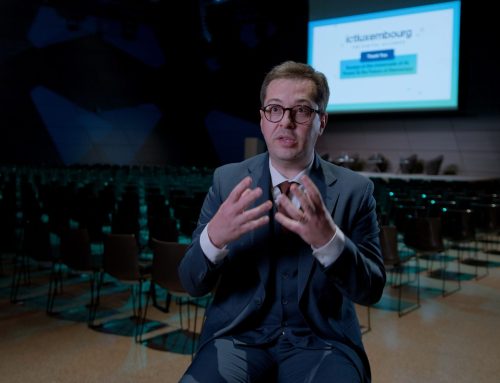

“Europe at the Crossroads of AI, Power & the Future of Democracy” can’t sound better than in the University . On May 12 2026, ICTLuxembourg, in the Maison des Arts et des Étudiants of the University of Luxembourg, Belval Campus launched a discussion adressing the future of innovation, technology, and economic development in Europe.
Innovation is no longer optional. In a world shaped by artificial intelligence, deep technologies, and increasing global competition, Europe’s ability to turn research into real-world impact has become a strategic imperative.
In our latest ICTLuxembourg interview, we had the pleasure of speaking with Prof. Jens Kreisel, Rector of the University of Luxembourg, about the challenges and opportunities facing Europe, the importance of investing in talent and research, and Luxembourg’s unique position in the international innovation landscape.
From Knowledge to Impact
Universities play a critical role in shaping tomorrow’s economy. Beyond education and scientific discovery, they serve as catalysts for innovation by connecting research, industry, entrepreneurs, and policymakers.
During the discussion, Prof. Kreisel shared his vision of how academic excellence can create tangible economic and societal value. By fostering collaboration across disciplines and sectors, universities can help accelerate the development and adoption of breakthrough technologies that address real-world challenges.
Luxembourg’s Ambition on the Global Stage
With its multicultural environment, strong public support for innovation, and growing technology sector, the country offers a fertile ground for research, entrepreneurship, and collaboration. The conversation highlighted the importance of attracting world-class talent and creating the conditions that enable innovation to flourish over the long term.
Collaboration as a Competitive Advantage
One of the key themes of the conversation was the importance of partnerships.
The most significant technological breakthroughs rarely emerge in isolation. Progress increasingly depends on collaboration between universities, businesses, startups, investors, and public institutions. By strengthening these connections, Europe can accelerate innovation, increase resilience, and reinforce its competitiveness in a rapidly changing world.